Kitch

TK, Terry Bo, Bo, Kitch.  These were some of the nicknames I have used to refer to my friend Terry Kitchen over the years.  Come to think of it, I’m not sure I ever called him Terry.  

I first came to know of Kitch when I would watch the older leagues play baseball.  He was in the National League in Little League so I missed playing against him there. 

I got to know him a little better on the football field at Central High School.  He was a senior when I was a sophomore.   As a sophomore quarterback, I was on the “scout team” and would split time with Larry “Songbird” Swan attempting to run plays of our opponents against the first team defense in preparation for games. I can attest personally that Kitch was a hitter. His leadership on defense was a key to our undefeated (fall) 1969 regular season. We would later lose in the playoffs to a loaded McCluer High School team. He was not a rah-rah type, but rather led by example, and his teammates held him in high esteem. He was not flashy.   He was simply a very tough, athletic football player that got the most out of his ability by mastering the fundamentals and playing fearlessly with a lot of heart.  He did have a natural charisma and was the kind of guy that raised the level of play around him. The kind of guy that made you want to be better.

He would later become my long-time teammate on the Capahas amateur baseball team. From my position on the mound, it was always comforting to see him over at first base or on occasion behind the plate.  I sometimes had a sneaky pick-off move and remember picking off both him and the baserunner a few times. We would laugh about that. His genuine love for baseball rubbed off on you.

It was October 17, 2017 when I travelled to Cape Girardeau on an errand, and I found out that Cape Central was playing a high school football playoff game in town that night.  On a whim, instead of heading home, I decided to stay and watch some high school football, and hopefully visit with some friends I had not seen in a while.  Other than Calvin Brennan who was selling tickets with his wife Kathie, (he waved me through, thanks, CB) I was disappointed that I saw none of my other old friends in the stands, which surprised me frankly.  After watching the first half from several spots, in the third quarter I saw Terry Kitchen down on the field near the north endzone standing by himself watching the action on the field. 

I remember thinking at the time that I had not met or spoken with Kitch in several years.  Having moved away from Cape, I had missed a good portion of his adult life.  I did follow his career, however, especially as a baseball coach.  I certainly knew of the legacy he had earned at Cape Central.  I worked my way down to the field level to a gate within sight of him and waited until he looked in my direction.  I gave him a wave, and he enthusiastically gestured for me to join him on the field.  After a quick handshake and embrace we began reminiscing and catching up.  TK had already been through his first round of medical issues, but he told me about the miracle that had allowed this first battle to be won and his recovery.  He was back! (his way to put it).  I will never forget that 20-minute conversation, and it was highlighted by his unwavering faith in God and optimism.

He eventually lost his next battle with cancer. I attended his visitation at his church on this past Friday, February 8th.  Among other things it was a great reunion of former Central High, Capaha baseball and American Legion baseball teammates, some of whom I had not seen in years. Not surprisingly, there was a steady, long line of people of all ages that showed up to honor this man. I got there 30 minutes after it started and it took me two solid hours to finally greet his wife Barb, their two fine sons and the rest of the family. I thanked Barb for sharing this good man with the rest of us.

Many inspiring tributes have been written since his passing. He was special. He touched so many lives, and left us with so many good memories. I know of no greater example of someone always doing the right thing and serving for the greater good. I know we will miss him.  For me personally, his life inspires me to try to be a better man.  When I think of him down the road, I predict my response will be to smile.  Thanks, Kitch.

The Learning Fields and the End of Innocence

The learning fields for baseball of my youth in Cape Girardeau, Missouri, in the 1960’s were the sandlots, back yards, and other more official places like the north Minor League diamond in Capaha Park, and the Little League diamond in Arena Park.  Looking back can be tricky.  The memories I have retained from those days are mostly pleasant, but not always to be trusted. 

What memories can you trust?  There are certain visceral details like the sights, the sounds and the smells. Visual memories like the gritty concrete dugouts, the lights, the fresh lime of the base paths, the shine on the new baseballs and the dust clouds stirred up by the rubber cleats worn by earnest young ballplayers, doing their best. The sounds of the game, most urgently the constant razzing of “no batter, no batter, no batter, no batter!”, and the odd “hum babe!” when encouraging your pitcher. Did we really think that chatter was effective? The distinctively unmistakable one-of-a-kind sound of a wooden bat striking a tightly wound leather baseball. Can you hear it? And finally, the smell of sweaty guys in hot flannel uniforms as we crowded into the dugout, and the distinct aroma of leather baseball gloves, with a hint of Rawlings’ Gloveoleum, a glove conditioner. Yes, I think we can trust those memories. 

Details of successes or failures in the actual games? These memories are the tricky ones.  I do remember that I played for the Little League Yankees for four years with varying degrees of success.  I loved the game enough to want to come back each year and to try to get better.

So, I decided to go back in time.  I did a bit of research.   The local newspaper, The Southeast Missourian, in our town documented both our Minor League and Little League games in a diligent and steadfast manner. Thanks to Google News Archives, on the Missourian’s link, you can find the results, not to be disputed, even 50+ years later.  The articles about these games (including all of the other older leagues) are mostly based on the coach’s scorebook and a short conversation between the coach delivering the results and the sportswriter. These accounts of the games would include box scores.  Any fantasies one may have had about dominating the league, or notions of being a superstar are reduced to hard truth.  I looked at a number of digitized sports pages spanning the early to mid-1960’s with great interest, not only for my own exploits, but those of my contemporaries.  It was enlightening.

Little League had two divisions:  American and National, and the team names were true to the same designations.  There was no interleague play. American League teams were the Yankees, Twins, Indians, Athletics, Red Sox, and Tigers. The National League had the Dodgers, Cubs, Mets, Giants, Braves and Cards.

Here are some of my observations, in no particular order:

  • Some of the scores could be football scores.  I think of the patience of our coaches to sit and witness those long innings, and it warms my heart.  And yes, I would coach in these age groups myself years later, and know first hand what that can entail.  One year my friends Troy Vieth and Brian Pfautsch and I coached the Little League A’s while we were in high school.  It was a fun season in which we won the AL crown but lost in the Championship. Much later, Tom Dohogne and I had some great adventures when we coached our sons together on various teams in the Cape Youth League.  Finally, Mike Dunaway, Kevin Ford and I coached a Cape based traveling team (including our sons) of 12 year old’s called the Astros. More on those experiences at another time.
  • There were no-hitters. On any given day, any above average pitcher could totally dominate. Sometimes, pitchers are just “on”. This can happen at any level in baseball, of course. Little League no-hitters happen when adrenaline, confidence, and good luck all strike a 12 year old kid at the same time.
  • The names of the kids I played baseball with in the 1960’s came rushing back into consciousness, and I was surprised at how many I remember, along with the ability to picture these guys in my head.
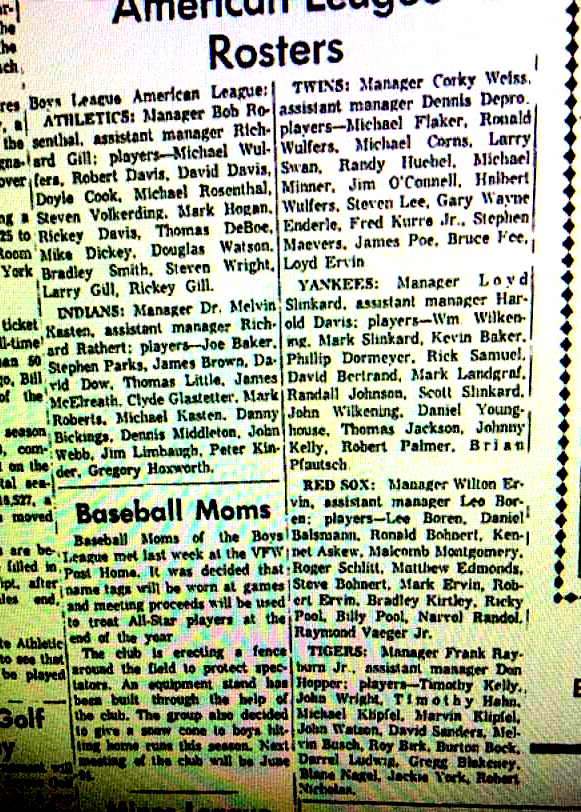
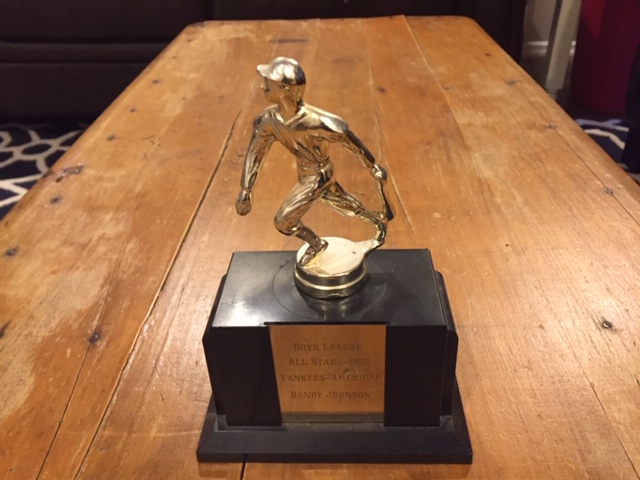
  • The stud pitchers in 1966, my last as a Little Leaguer, were Danny Eaker, Bob Ervin, Brad Kirtley, Terry Reynolds, and Roy Birk.  I didn’t make this cut, although I did make the All Star team in 1966, evidenced by a plastic trophy I still own to this day. As to Danny Eaker, he was a tough competitor that pitched in Little League for at least three years at a very high level, and I never saw a box score with a bad outing from this kid.  My memories of Bob Ervin were that he was a cool customer that pounded the strike zone relentlessly. The Red Sox had two stellar pitchers in Ervin and Kirtley, which should explain why the Red Sox were the class of the American League.
  • The teams that won consistently were those that had the solid pitching and catching.  This doesn’t sound like rocket science, I agree, but it was especially true at this age.  As to hitters, there were usually only 2 or 3 really good ones per team. It was walks and errors that usually beat you.  
  • I can’t always remember what I had for lunch on a given day, but the long ago memories are still powerful from my baseball youth:  I can still name a bunch of my teammates over the four years I played on the Yankees. Here is an incomplete but accurate list:  Mike “Sand Dog” McKinnis, John and Ben Stafford, Alan Wills, Doug Glenn, Kenny Baker, Nick Powers, Mike and Bill Wilkening, Dan Younghouse, David Bertrand, Mike Uhls, Mickey Palmer, Brian Pfautsch, John Kelly, Rick Samuel, Mark and Scotty Slinkard, Mark Landgraf. Our manager Loyd Slinkard was a very kind man of few words and a big heart.

One of my above mentioned teammates, classmate Rick Samuel, became a saxophone player of some renown. Rick and other talented musicians had created something very special at Central High in the form of a fantastic stage band. He and two friends, Phil Cloud and Derek Proffer, died in the early fall of our senior year in high school in a tragic auto accident. Rick and his friends were driving to a music concert at SIU in Carbondale, IL, and a truck crossed the center line causing a head on collision. Another classmate, Don Wilson, miraculously survived the crash. The thought of these friends on a carefree outing and in an instant, utter horror, is life-changing. End of innocence? For me and the rest of my classmates, it was. For our Yankees, Rick played a solid center field, and while tracking flies, had the habit of holding his arms straight out wide like wings while waiting for the ball to arrive.  I can still visualize this from the pitcher’s mound. Wow, the things you remember. Rest in Peace, Rick.

The Perp Walk

I didn’t play basketball my senior year of high school, 1971-72.    The team went on to a great season without me.  Hmm. Addition by subtraction, you say? Not really, because I was pretty much a non-factor as a squad member in basketball at Central High School in prior years, mostly supporting and cheering the team from the bench. Let’s just call it a coincidence.

The Tigers won the conference, won districts, and went to the Missouri State Quarterfinals, finishing 24-4.  Cape Central would have likely gone to the semifinals if they didn’t run into a sizzling Sumner High School team that shot 75% (not a typo) from the field in the quarterfinals at Kiel Auditorium while beating the Tigers 66-61. 

These guys were very exciting to watch.  Led in scoring by a pair of 6’5″ juniors, Dick Buxton and Hunter Stiegemeyer, the team also featured the steady hands of seniors Mike Uhls, Ken Hosea, and defensive star Roland Daye. Super sixth man Randy Carter was instant offense, a scoring machine averaging double digits off the bench. These guys played very hard on defense, especially Roland, who at 6’4″, was quick and tenacious, and was usually tasked with guarding the other team’s best scorer. 

That season their conference rivals, the Charleston Blue Jays, were especially tough. No game showed this team’s character better than when the Tigers won a hard fought game in a hostile environment on the road at Charleston late in the year. This game somehow avoided a fan melee after the game, caused by their scorekeeper. Here’s what happened: the Tigers were down by 15 points late in the fourth quarter, and heroically fought their way back to within 1 point with five seconds left in the game and possession of the ball. After a timeout, the Tigers ran a play, missed the shot, and Roland Daye darted through the lane and tipped it in, just as the entire scoreboard and clock went blank. Apparently, the timekeeper in his excitement kicked the plug out of its socket. Yes, really. Pandemonium. When the scoreboard was eventually plugged back in, it showed one second left. It was generally felt that the scoring play in its entirety likely took more than five seconds, but the refs had no choice but to rule the basket good. We (Tiger fans) all literally had to run a gauntlet of angry, frustrated Blue Jay fans to get to the parking lot.

One other Friday night game at home was particularly memorable for me.  I had gone to the game with my good friend Brian and had settled into a large group of fellow seniors on the student side.  The stands were packed on both sides of the gym. I don’t remember our opponent that night.  As we were watching the game, I began to notice a commotion behind us and to the right of where we were sitting.  It appeared to somehow involve my baseball teammate and catcher Mark, who was sitting next to Kent, another classmate.  Word was whispered down the row that Mark had an air-horn that very much resembled the horn that sounded at the end of each quarter.  Hmm, that could be trouble, I thought.  I went back to watching the game, aware that their antics at the end of the first quarter had already gotten the attention of the mostly humorless Athletic Director Weldon Hager and Assistant Athletic Director Leon Brinkopf, who were both grimly scouring the group of us from the other side of the gym where the parents and other adults were sitting. 

With Brian on my right and another friend Terry on my left, we were minding our business watching the action on the court when the word came down our row that Mark intended to blow the horn one more time close to half-time, with a seemingly (at least to them) brilliant plan to pass the horn down our row stealthily with our feet so that when Mr. Hager and Coach Brink followed the sound, there would be no horn to confiscate.  OK, whatever. 

Right before half-time, Mark blew the horn. The referees stopped play, and all eyes in the gymnasium were on our section.  Mr. Hager and Coach Brink made a bee-line to where our group was sitting.  As predicted, the air-horn began making its way down the row, sliding it with the feet.  Brian passed it to me, and I started to pass it on to Terry.  Terry, wisely not wanting any part of this fiasco, froze, and while staring straight ahead almost unperceptively shook his head.  Wild-eyed, red-faced and furious, Weldon Hager was looking down our row by this time and I was about to be caught with the horn under my feet. Instinctively, I kicked it under the stands.  Uh oh. Mr. Hager saw this and immediately gestured for me and Brian to follow him.  We obediently made the perp walk down our row and down the aisle, all of this happening while everyone in the crowded gym including the players, coaches, parents, and referees were watching intently.

Brian and I were summarily ejected from the gymnasium.  In a snap, we found ourselves out in the parking lot in front of my red Volkswagen Beetle.  Brian and I looked at each other in disbelief.  I admittedly was in a bit of shock.  I think it was Brian that said finally: “WHAT JUST HAPPENED!?!?!?”  The absurdity of it all hit us like a splash of ice cold water.  A spontaneous, genuine belly laugh erupted from both of us–the likes of which I had not experienced in a long time.  We spent the rest of the evening listening to the game on the radio, all the while shaking our heads at the crazy circumstances we landed in, and cruising Broadway as was the custom back in those days.

Epilogue:

On Monday, I was called out of class to see Coach Brinkopf.  In his office, I was asked to sit down.  He spoke first: 

“Randy, we now know that you and Brian were not the ones responsible for the air horn. Mark came in today and confessed. Apparently, it is an expensive horn that Mark borrowed from his uncle Jerry’s boat, and Jerry wants it back.  Look, I know all about loyalty and protecting friends and not ratting them out, but you must realize that you had an excellent opportunity to show some leadership, and you should try to stop things like this from happening.  Your classmates respect you, and they will listen to you.”

“Sorry, Coach”.

“Anyway, having said all that, I am apologizing to you and to Brian for last Friday night.”

”That’s OK Coach, it’s been that kind of year.”

One positive thing…it did give Brian and I a little ‘street cred’, at least for a few days, anyway.

The Angel

In the late 1980’s and early 1990’s I was travelling a lot between Cape Girardeau, MO and Little Rock, AR. I would get to know that drive very well over time. South on Interstate 55 to West Memphis, then west on Interstate 40. I knew where all the good exits were for gas and snacks. Once you get below Cape Girardeau and Benton Hill, the terrain is very flat, and the challenge is the resulting monotony. Northeast Arkansas south of Blytheville has a particularly long stretch of I-55 where there are few towns and few exits at all for that matter. There were numerous trips to Central Arkansas from St. Louis while we worked on getting a bank charter approved. Then after we finally got the bank open and we had moved the family to Little Rock, I would travel back to Cape Girardeau, Missouri a couple of times a month.  I would arrive in Cape late on Sunday nights to attend an officer’s meeting on Monday morning, pick up supplies, discuss loans, etc. Later, on Monday I would then make the drive back to Little Rock, sometimes late in the afternoon.

It was on one of these trips, that I had an adventure. It started routinely enough with meetings in Jackson and Cape, with me finally hitting the road late in the afternoon for the mind-numbing solo drive to our Arkansas home in West Little Rock. I remember making a mental note that particular evening somewhere in the boot heel of Missouri to stop in Blytheville, AR to get gas, as I was getting pretty low. I must have been daydreaming or thinking about work, because I blew past Blytheville without a thought about my gas tank. I was totally in another world when the car suddenly lost power and rolled to a stop on the right-hand side of the road. In an instant, I knew my dilemma. I was somewhere in the “Bermuda Triangle” of no exits and no gas stations between Blytheville and West Memphis. I didn’t even know how far past Blytheville I was. The fact that the sun was already setting in the west behind Crowley’s Ridge told me it was too far to walk back. This was before cell phones, so no help there. I sat there for a few minutes, while all the realities of my situation had time to settle in my mind. My wife Rita would begin to worry at some point. Wow, Randy, you really put yourself into some deep crap this time, didn’t you?

Here were my options, as I saw them at the time: Stay with the car and hope for a state patrol car to happen by, or start walking. I decided to walk. It was already dark when I took off south on the shoulder of I-55. One of my scenarios had me heading off the highway at some point toward farmhouse lights, and if the setting looked “right”, knocking on a door to use a phone and call a tow truck. I had credit cards and $45 in cash.

I had walked about 150 yards down the road, when I noticed a car travelling my direction slowing down to pull over. It was a beat-up Ford Pinto with Florida plates. I remember taking a deep breath, in and out, and saying a quick prayer. My prayer was simple: that I was trusting whatever God was putting in my path. The driver rolled his window down and asked if I was having some car trouble.

“I ran out of gas. That’s my car back there.”

“Hop in, I can take you to get gas.”

“I think the closest gas is West Memphis.”

“I can take you there, and bring you back here.”

“Are you sure? I think it’s pretty far.”

“Hop in. It will be fine.”

I got in the stranger’s car with much trepidation, remembering my prayer. I had to trust, didn’t I? The Pinto looked like it was literally lived in. It was piled with clothes, food wrappers, and smelled of body odor. The passenger’s seat had no upholstery. I noticed that the gear shift in the steering column was a large screwdriver. I learned that the man’s name was Robert, and we spent the next fifty minutes getting to know each other, as that was how long it took for this guy to take me to get gas. He had time to tell me the story of his life, a genuine tale of woe, which I will relate now:

Robert had been an engineering major and had married a girl he had met in college. They had been raising three kids and living in Michigan. He and his family were driving home one night, and he topped a hill and had a head-on collision in his station wagon. He was the only survivor of the accident. He was severely injured, including a very serious head injury. As a result, his mental capacity had diminished to the point he could no longer be an engineer. He had turned to alcohol to cope with his sorrows and had eventually spent all of his settlement. He later got himself sober and moved to Florida to try to get away from his bad memories and make a new start as a laborer. He worked in Florida for a time but was recently laid off. With no cash reserves, he needed to work. Last week, he had heard of construction jobs that needed filling in Colorado. He had driven up there, sleeping in his car when he got tired–only to find the jobs were filled, and he was driving back to his home in Florida.

We pulled in to the first open gas station in West Memphis. I paid a deposit on a gas can, bought a few gallons of gas, and we headed back to my car. After putting the gas in, I told him to meet me at the same gas station in West Memphis. Once there, I convinced him to allow me to fill his tank, and also to accept the $45 cash I had with me. He resisted at first, and later tried to get me to give him my address so that he could repay me, but I said no. I filled my tank there and drove home without incident. It took me several years to tell that story to Rita, probably a combination of not wanting to alarm her, and mostly due to the embarrassment of my being so careless.

There were many levels to this story, but the most obvious to me: the power of prayer answered by God. My prayer was instantaneously and fully answered, there can be no doubt. Luck had nothing to do with it. I cannot calculate nor conceive those odds. The man that helped me that night was somehow put in that perfect position to see my dilemma and act upon it, and he volunteered to help without hesitation. Was it his own desperate situation that made his decision easier? Would the average traveler on a dark lonely highway, comfortable with his or her life, be as likely to stop to help me? No. This was no coincidence, my friends. This man was an angel.

The Mooney

I was working in Little Rock, Arkansas in the early 1990’s.  Life was speeding by at a break-neck speed. With three young kids, and no network of childcare or baby-sitters, Rita had her hands full.  Working in a newly chartered bank had its challenges, including getting good loan prospects.

At some point I was introduced to a local dentist, Sam Beavers. Sam was one of our good prospects. He had a successful dental practice in North Little Rock, and had an unrelated business opportunity in Fort Smith, Arkansas that he wanted to discuss with the bank. I liked Sam, and his enthusiasm was infectious. I said I would like to see his Fort Smith operation. Sam said no problem, and we planned a visit on Thursday. Fort Smith was a 2 ½ hour drive west on Interstate 40 from Little Rock. I said I would be glad to drive, but Sam just grinned and said, “No, let’s fly.”

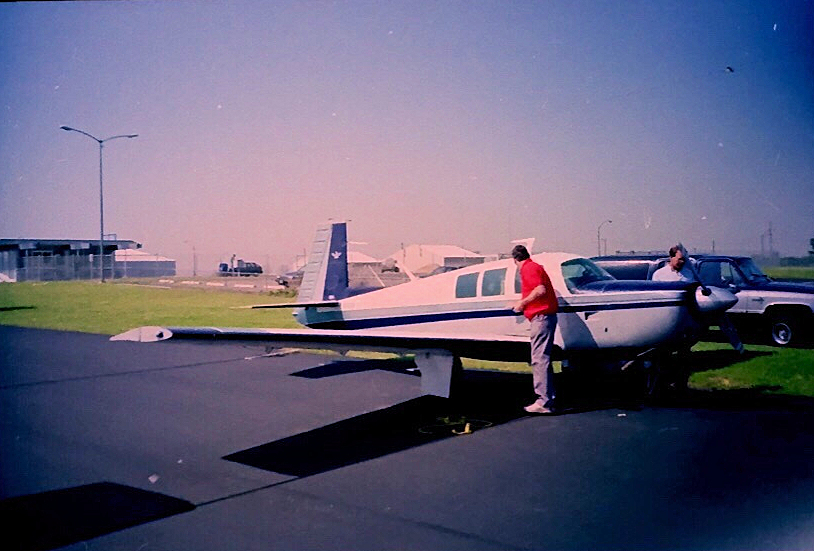
Sam and a business partner owned a single engine plane known as a Mooney M20. He said the weather was going to be fantastic on Thursday, and we could zip up to Fort Smith and be back in just a few hours. He also said that he had been so busy lately that his plane really needed to be flown.

Image-1

I didn’t know a Mooney from a Piper from a Cessna, but later learned that the Mooney’s track record had been less than stellar, primarily due to pilot error. It was a very fast plane, and handled very tightly.  All this made any mistakes hard to correct. Also, the plane tended to attract medical and legal professionals that flew as a hobby, vs professional pilots. All this information came from my friend David Crowe, and he would know.

Thursday was indeed a beautiful day for flying. We headed basically west from the airfield in North Little Rock, and slightly north. Most of the flight was without incident, and we chatted like old friends over the headsets, with me in the second seat. This plane had all the bells and whistles, and had been recently overhauled, including upgrading the electronics, the navigation system and the works.  Sam proudly demonstrated and explained all of the new features.

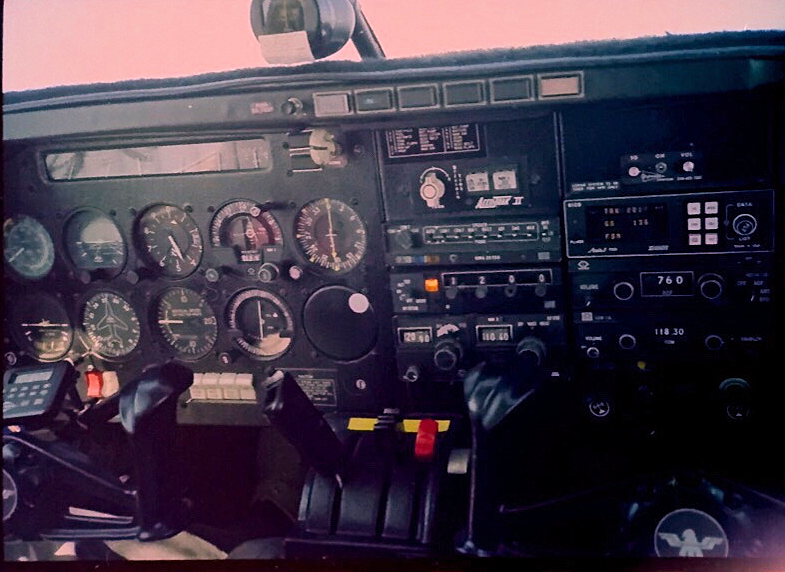
When we got close to Ft. Smith, Sam was in contact with their tower and we started our approach. Sam, talking to me, said “I should probably test the landing gear before we begin our final descent.” He calmly reached for a shiny toggle switch located in the middle of the airplane’s dashboard. A few seconds later, a yellow flashing light began to flutter.

Image-1 (1)

“Hmmm” said Sam calmly, “That is something that has never happened before. That light should be green. Let’s try that again.” Sam tried again and got the same result. He looked my way and smiled. Note to self: Don’t play poker with Sam Beavers. He radioed the tower that we were going to delay our landing for just a while to get our landing gear issue resolved. Sam looked at me, and said that everything was fine, and that if worst came to worst we could crank the landing gear down by hand.

Then Sam looked to his left, then his right and said this: “Randy, if you don’t mind, take the yoke. We are on a good heading right now. That will give me a chance to get the manual out and see how the hand crank works.” Really, Sam? I think I did OK, although I could tell we were slightly flying on an upward plane and bending slightly to the right as I white knuckled it, piloting the Mooney. I did not try to test any “play” in the yoke, obviously.

For the next few (long) minutes Sam riffled through a paperback manual and fiddled with a handle in the floor between the seats. He occasionally looked up to see how I was doing flying the plane. His calm demeanor continued and I did not feel all that worried until I noticed a fine bead of sweat on the dentist’s upper lip. After a while, he apparently gave up on the hand crank idea, because he looked at me and said that even if the landing gear would not work, we could “set the plane down in some marshy wet ground he knew of to the south of the airport.” Hmm, I thought, that might shake a few fillings loose, Sam.

Then he said, “I’m going to try this one more time.” He reached up and flipped the toggle switch on, and we both noticed a flash of green. In his excitement, though, he flipped it back off. “Was that green?”

“Yes, I think so” I replied. The next time he tried, it seemed to work, showing a steady green light.

When your pilot looks relieved, that is a good thing. Sam called the tower and they suggested that we do a fly-by and they would put the binoculars on our plane to see if the landing gear was down. We did, and they said it appeared to be down, although they could not determine if the wheel was locked in place.

Sam looked at me and said “At some point, you just have to trust your equipment.”

We landed safely, while the airport got the firetrucks ready just in case. After we got out and stretched, Sam went to find an airplane tech so they could check out the plane while we took a rental car to look at the properties.

When we got back to the airport, the technician determined that the shaft on which the wheel mechanism slid down had become slightly dry and a little rusty and needed lubrication. The electric motor that worked the landing gear would struggle against the rust, and the motor would shut off each time (as a failsafe against burning the motor out). Eventually, enough lubrication worked onto the shaft to allow the little electric motor to do its job. The result was our safe and smooth landing.

We flew back to Little Rock in a still, starry, calm twilight. The return flight was thankfully uneventful. This adventure came to a peaceful end. Sam was impressive, keeping his cool, even when faced with the prospect of landing his nice plane in a swamp. I would have flown with him again, any time, if given the opportunity. I never got that opportunity. I lost track of Sam after we moved away from Little Rock.  A recent Google search revealed Sam’s obituary, showing he died much too young in 2011 at age 66.  Rest in peace, old friend.

The Summer of ’71 (Part One)

Prologue:

Doc was holding court.  We were in a bit of a hitting slump, and Manager John “Doc” Yallaly was standing in the aisle of the ancient American Legion bus, steadying himself back and forth as the bus rumbled along, talking baseball with his players.  The bus was making its way from Cape Girardeau to Murphysboro, IL for a weekday night game.  Doc Yallaly was old school all the way, and was doing what he did best:  simplifying baseball down to its essence.  Baseball to Doc was always the noble pursuit.  He had dedicated much of his life to this game he so much loved and would do so for many years to come.  His impromptu speeches to inspire his players and to loosen them up were without peer, and that includes my college coach, Robert E. “H. S.” Finley. 

He was getting around to the main point of the discussion when he asked one of our guys what was the most important thing to think about when you are at the plate. I think my teammate may have responded with something about concentrating on swinging at strikes and making contact. Doc’s response was classic: “Aw, HELL no, man! You’ve got to swing HARD up there! You’ve got to DRIVE that ball! Get your money’s worth up there!  None of this ‘pat the ball’ shit”.  And finally, this highly polished gem:  “Look, boys, playing baseball is a lot like wiping your ass. You’ve got to find that groove!”. The wisdom of a good coach includes knowing when the team needs to loosen up.

Doc’s pep talk worked that day, as the record shows we won 3-0. Gene Dewrock had a monster night: he was 4 for 5 with a double and a triple. Also, Tim Kelley was 3 for 4 with two RBI’s. No surprises here, as both of these guys were solid. However, the biggest story of the night was Donnie Miller who struck out 23 (not a typo). 23 K’s is an impressive number for nine innings even with Murphysboro’s notoriously dim lights. 

1971, Summer, Cape Girardeau, MO

In the summer of 1971, our Cape Girardeau American Legion baseball team was strong. With veteran experience from a stout Cape Central High team, and a deep pitching staff, this team was able to match up against a pretty tough schedule. In addition to Cape Central High and Cape Notre Dame players, the team added several key players from Sikeston and Jackson to its roster. Everyday players from Cape Central were: Gene Dewrock, shortstop; Tim Kelley, second base; Carl Gross, first base; Troy Vieth, third base; Steve Schlick, catcher; John Wright, catcher; and Steve Volkerding, outfield. Other outfielders were David Hackney from Sikeston and Mike Frey from Cape Notre Dame High School. Utility player Mark Adams was from Jackson High School.

Leading our pitching staff was Galen McSpadden, a lean, rangy lefty from Zalma, MO, who had just finished an outstanding freshman season at Southeast Missouri State. Besides having a great name that sounded like it came from an old faded baseball card out of the 1950’s, Galen was the consummate pitcher. Six feet tall and broad-shouldered, Galen was poised, unflappable and confident. His stuff was good, but his execution was even better. He had a smooth deliberate delivery and did not throw all that hard, but his fastball was sneaky fast, and he had an excellent forkball he used as a change-up. He hammered the bottom of the strike zone and all of his pitches had a purpose. I don’t remember him having a bad game all summer. Galen, after college, went on to play in the Padres organization as high as Triple A. He would later become a successful JUCO baseball coach in Kansas. There could not have been a better role model for a young lefty like me that was still trying to find himself. I remember asking him once about his training regimen, and he did not hesitate: “I throw a baseball every day”.

Donnie Miller from Sikeston was also impressive and would become our number two starter. He had been a major nemesis of Cape teams in high school and Babe Ruth league tournaments for years. I was glad he was on our side for a change. He was a righthander who threw extremely hard, and had strikeout stuff. His windup was tight and controlled, smooth and measured, and his heavy two-seam fastball made a very satisfying buzzing sound before it popped in the glove. His breaking pitch was sharp and tight, and while it didn’t break big, he threw it very hard and for strikes. Donnie would go on to play for the Lobos at the University of New Mexico in Albuquerque.

Other pitchers added needed depth, including Cape Central’s senior staff leader lefty Mark Hogan. Hogan was a winner and he knew how to pitch; he had a smooth dart-throwing style.  His fastball was deceptively hasty. His stuff also had a lot of movement, and hitters had a hard time squaring the ball up. He had just come off a dominating senior season at Cape Central, and would later join SEMO’s pitching staff.  Later still, Hogan would have a very successful coaching career, leading Southeast Missouri State’s baseball team as its long time head coach.

The rest us were coming off of our junior seasons at Cape Central.  Big right hander Gene Schlick, was also a potential ace–a talented, if sometimes erratic, hard throwing right hander and was literally fearless. Danny Eaker was a stocky righthander, rock solid and a tough competitor, and would be counted on primarily to be a reliable option out of the bullpen. Rounding out the staff was yours truly, a lefty. My biggest challenge this summer was going to be getting a healthy share of innings on this team, let alone starts.

My summer of 1971 would be full of new experiences. The baseball season would provide tests of mental toughness.  I would be pitching against better competition than ever before.  My first real summer job of painting houses would be a learning experience. There would be long bus rides late into the night in an ancient blue American Legion bus passing time with brothers in arms.  The post game feast was always the same: soggy ham sandwiches, day old Dixie Cream Doughnuts, and lukewarm cans of Pepsi.  I have to say, we were always ravenous at that point and grateful.  Our Legion team would make a deep run in the playoffs, with a surprising twist.  Oh, and the most intriguing point of my summer? A bona fide secret admirer.  Heady stuff.  It would be a summer to remember.  More to come………

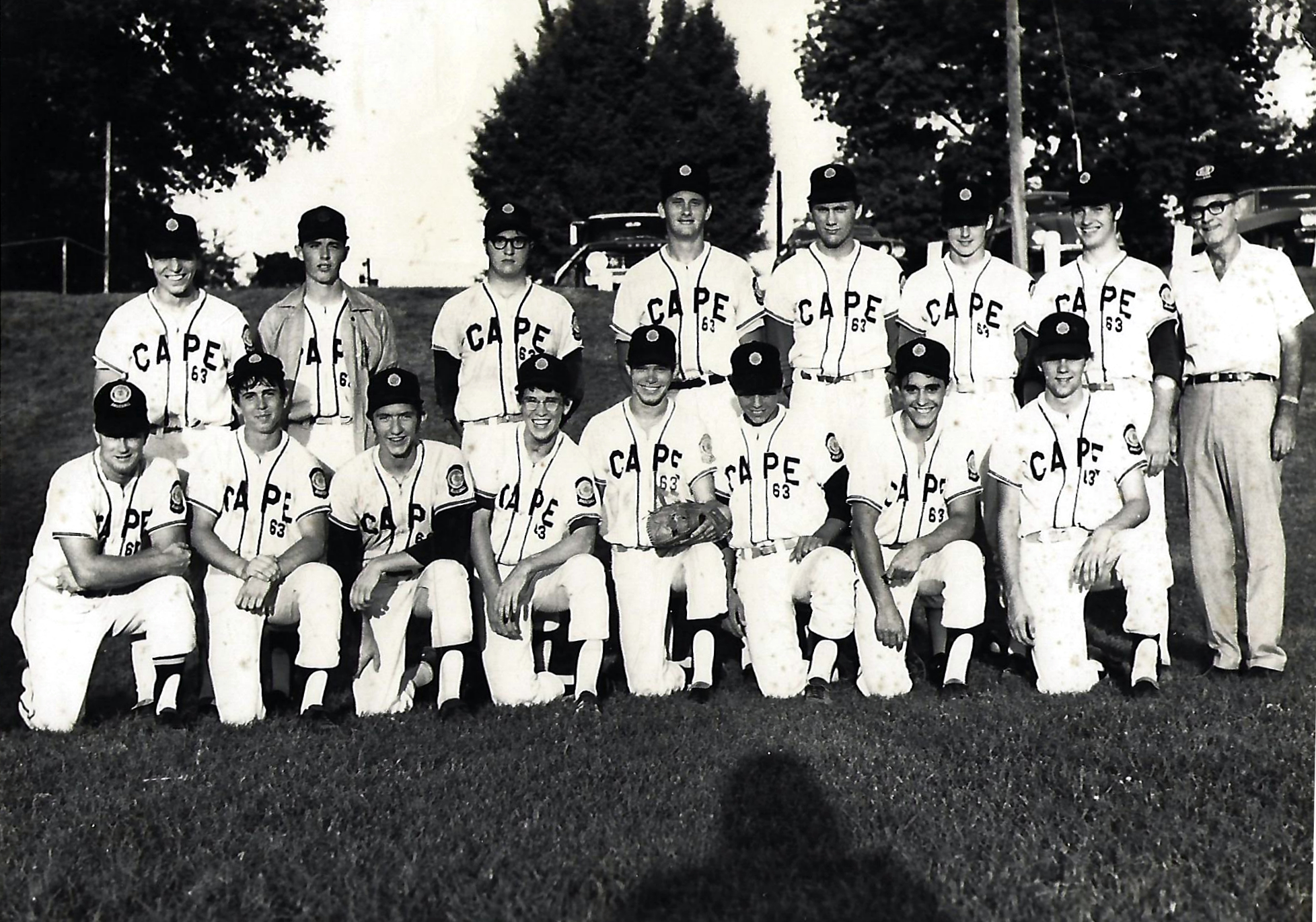
Top row: Gene Dewrock, Don Miller, John Wright, Carl Gross, Gene Schlick, Galen McSpadden, Randy Johnson, Truman Howard.

Front Row: Doc Yallaly, Steve Volkerding, Troy Vieth, Tim Kelley, Mark Hogan, Danny Eaker, Mike Frey, David Hackney. Injured and not pictured: Steve Schlick.

Consent and a Triple Header


Late in the spring of 1976, The SMU Mustang Baseball team was down. The exuberance that every spring season brings had long since faded. A statistical review of my senior season is particularly tough to take. Under harsh light, the details of the games in which we were competitive and also leading late in games are not evident. Looking back at the scores, we seemed to be just bad enough to lose games. There were a few blowouts, sure, but we lost a bunch of close games, too. The record shows that we committed 106 errors in 38 games and hit .189 as a team.

Waco, season series finale, 1976:

By the time our trip to Baylor University in Waco, Texas came around, our record was 2-33. We actually thought that Sports Illustrated might be interested in our story. And, we may have been worthy of at least a mention if we hadn’t swept a double header against the University of Dallas in the middle of the season. There were several stingingly frank articles in our school newspaper, The Daily Campus, that were very polarizing for the university. The articles basically said the status quo was untenable, and that the University needed to either spend substantial money and boost the baseball program up, or do away with it altogether. I agreed. Our poor record was the culmination of neglect that our program had experienced for the last four years. There was already in place a plan to convert our home ballpark, Armstrong Field, into a track complex and move the team off-campus. The very future of SMU baseball was in doubt.

Thinking too much about losing is a potential pitfall, of course. If you try to attach too much importance to your role in a season like this, it can be hard on your self-esteem. However, disassociating yourself from it can be a form of denial that is also dangerous. Thus, you have a dilemma. You ultimately have to decide that the season does not define you. But it does change you. This season simply kicked us all a bit sideways.

We arrived in Waco for our last Southwest Conference series of the season and last three games of my college career. After checking into our motel late Thursday afternoon, the first thing we were told was that there had been a ‘malfunction’ of their sprinkler system that had flooded the field. We could not play our Friday games. The Bears, anxious to get these games in with the last place Mustangs, petitioned the league for a triple header on Saturday. With our second-string catcher David Bostic in Dallas playing fullback in SMU’s Spring Football Game, Bruce Gietzen would likely have to catch all three games on one day. Not good, and maybe unprecedented in D1 baseball. It was years later that we would learn that a Baylor player had actually sneaked on the field in the middle of the night and turned the water on, as depicted much later in the movie “Bull Durham” so that he could attend an out of town party with his girlfriend.

That is how it came to be that we were stuck in a motel for at least two days with little to do. I was rooming with my best friend at SMU, outfielder Rob “Goose” Goss, second baseman Mike “Jake” Jaccar and our third baseman Jack “Pandy” Speake. Thursday night with no game the next day, a party was planned for our motel room that included at least two cases of beer, two bags of ice, some cheap cigars, and our bathtub that would work nicely as a beer cooler. I know what you are thinking. Of course, drinking beer on a road trip was taboo. We had merely decided to try and make the best of our situation, which was staying in a cheap motel in Waco, Texas for three days.

The four of us were in our room, waiting for the beer to get cold, when Coach Finley came in. Yikes! He was as bored as we were, and restless, which only added to the tension. Furtive looks all around.  We are all thinking the same thing: man, I hope he doesn’t need to use the bathroom! There would be trouble. Getting dismissed from a team with a record of 2-33 would be beyond embarrassing. Our bad luck; Finley had a large wad of chewing tobacco that he was working on. After pacing around our room for a while, of course eventually he had to spit. As he disappeared into the bathroom, we four exchanged guilty looks. Plain and simple, we were ‘busted’. Oddly, he came back out, and resumed the conversation as if nothing had happened. After just another short while, he had to spit again. He could not have missed seeing the beer in there. Something else was afoot.

He would not leave. One by one, several of our teammates came in for the party. Each, upon seeing Finley there, gave questioning looks to me, Goose, Jake and Pandy. All we could do was shrug. Then it dawned on me as to what was happening. He was waiting for a bigger audience! I think he also wanted to see who else might be in on the beer drinking. Finally, when about seven or eight of us were there, he went in for a final spit.

“All right, what’s going on? It looks like a damn brewery in there! Whose beer is that?!”

“It’s Landsmann’s beer, Coach.”

Jake said it with such audacity and confidence that it set Coach Finley back on his heels a bit. Brian Landsmann was our naïve strait-laced freshman shortstop from Cleveland, Ohio, and one of Finley’s favorites. Landsmann was also a guy to whom Finley enjoyed giving a lot of good-natured grief. Finley, recovering quickly, got this somewhat maniacal look in his eye, and in an instant, we knew he was ‘all in’. He growled, “Get Landsmann in here, then!” Someone left to get Landsmann, who came in looking like he had been asleep.

Finley led the perplexed young man to the door of the bathroom and pointed. “Landsmann, they said this is your beer!”

Landsmann, turning beet red, with all eyes in the room on him: “Coach, I…uh…don’t know…uh…” After a few minutes of protestation, Finley finally let him off the hook.

Next, surprising everyone, Finley roars, “This is too damn much beer for just you guys to drink. Get the rest of the team in here!”  The whole team was roused and dispatched to our room to drink the beer. Finley did not partake, although he stayed until the last can was finished. As the party dwindled down, only a few of us remained. We were watching the Johnny Carson Show. Lounge singer Robert Goulet came on, and as he sang some now unmemorable song, all of a sudden with no warning, “Smack!” A large wad of chewing tobacco hit and stuck to the wall just above the TV. It had sailed a bit high. Apparently, Coach Finley was unimpressed by the song stylings of Mr. Goulet.

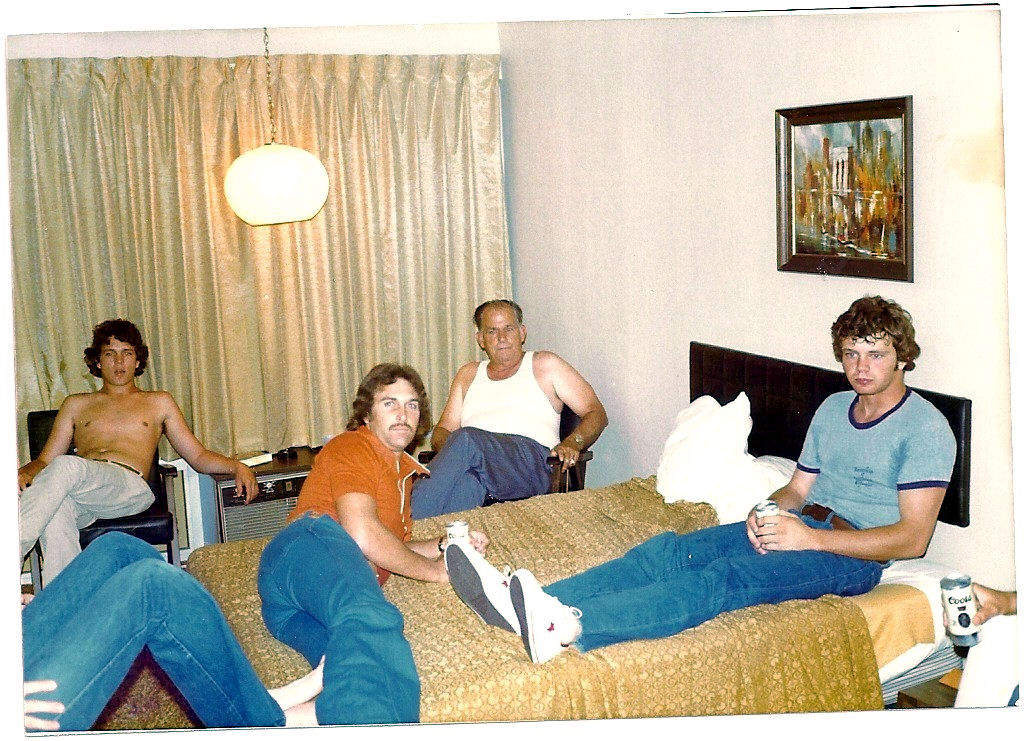
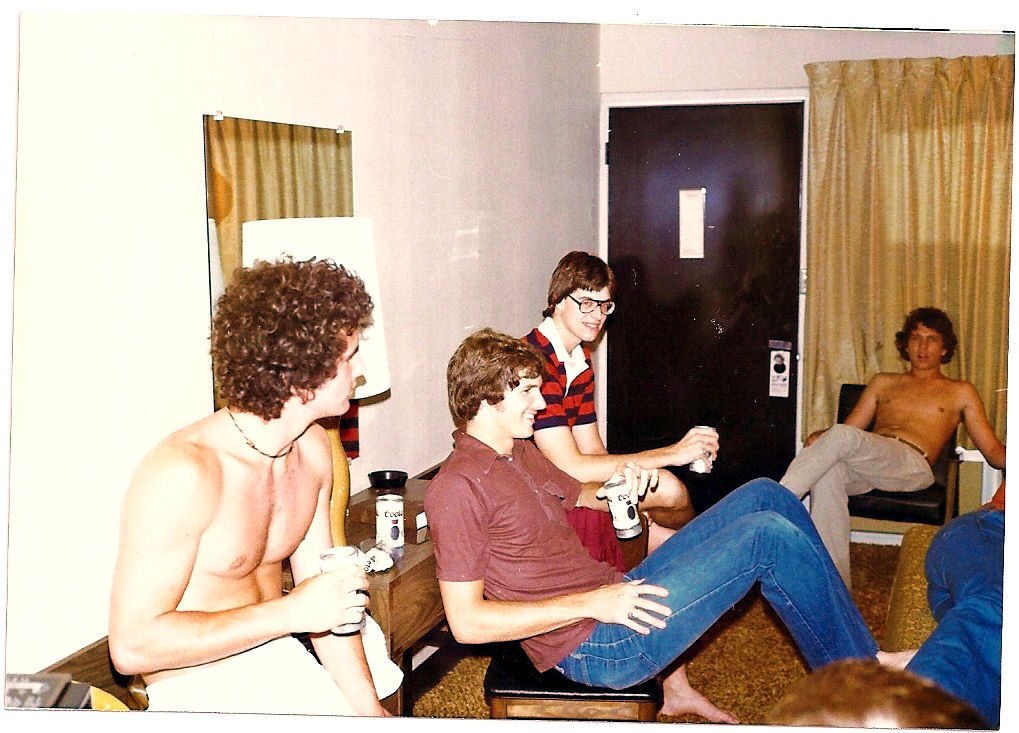
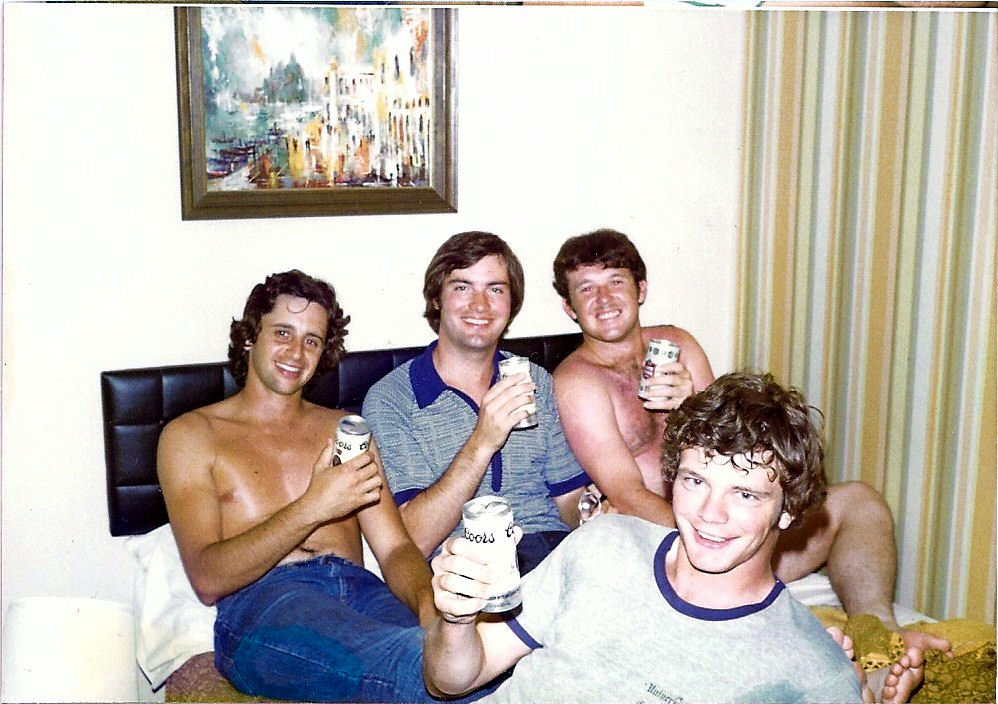
Coach Finley had known that his Mustangs were hurting and puzzled about the results of their efforts on the field this season. The ‘Stangs were licking wounds from a season no one had seen coming, and no one would ever forget. He let the beer incident go….and never another word was said about it, although I do have pictures:

J.P., Hall, Coach, Jake
Landsmann, Beard, Smitty, J.P.
Goose, me, Pandy, and Jake

The record shows that we lost three in a triple header to Baylor on Saturday, ending the season at 2-36. There was nothing particularly memorable, at least for me, that happened on the field for us that weekend. The memories we had made were off the field this time, and came from trying to live through a really strange season. And Waco was an apropos setting.

Already Home

Like many Dads of his era, mine took many 16mm film home movies.  It was always a welcome evening back in the day when he would get out the projector and take requests.  Then, at some point in the 1980’s he had Shivelbine’s Music commit them to three long-playing VHS tapes.  Much later, with a simple program on my computer, I digitized them, edited the content of some of them, and added music.  This one has a little bit of everything:  music by Marc Cohn used with YouTube’s licenses, scenes from our home on North Henderson Avenue, a birthday silly contest with my brother and sisters and a few childhood friends, and finally some scenes from Play Day at Franklin School in Cape Girardeau in the late 1950’s.  Some of you will recognize Coach Jack “Pug” Russell starting the races.  

 Hopefully this will spark a memory or two with some of you.  I believe the harder we chase the stories of our youth, the more elusive they become.  Conversely, if you sit, wait, and be still, sometimes the stories can pour forth abundantly.  It’s a good thing.

Uncle Nasty’s

Prologue:

Baseball can be a game of failure. The very best hitters in the game fail more often than they succeed.  If you dwell on failure in this game, your performance will suffer. The game is no longer fun at that point.  Throwing off discouragement is the key.  The most successful players somehow can eliminate the dark thoughts and move on. 

There is also a profound uncertainty of outcome you just don’t see in other sports. These uncertainties of outcome happen hundreds of times at pivotal points in a single game. Your best hitter might strike out, and your weakest hitter could get the game winning hit; a screaming liner right at a defender for an out, followed by a dribbler down the third base line for an infield single.  A ground ball can strike a small pebble and change its course and thus its destiny.  A ball in flight might take a fateful path and intersect  perfectly with the sun and a right fielder’s eye.  Random game changers can happen at any time.

Thankfully, though, baseball is also most certainly a game of redemption. Hollywood has used this theme relentlessly in many baseball movies.  That next at bat, that next pitch, that next game or even that next season; there exists that chance for redemption. “Get ’em next time, kid.”

Lubbock, Texas, 1976.

The Ponies had been playing a little better baseball, but were still winless in the conference. We made the seven hour bus ride to Lubbock, and our spirits were low but improving. We went there on Thursday, and arrived at our motel, a four-story building with outside entrances.

On Friday, we pitched Jim Beard and Mike Hall. They had both been pitching well recently; in fact it was these two guys that pitched complete game victories in our non-conference doubleheader sweep of University of Dallas a week or two prior.

The record shows we lost these two games in Lubbock by the scores of 10-4 and 9-1. We were struggling (again) to say the least. We would have one more shot at the Red Raiders the next day.

On Friday night we were restless, and with nothing interesting on TV, we did the only logical thing healthy All-American college-aged guys would do: We called a cab and asked the cabbie where we might find a good local bar with music and nice young ladies. He did not hesitate: “Uncle Nasty’s”.  The city of Lubbock, Texas, back in those days, was dry. That meant that just outside the city limits was a string of bars and liquor stores lined up a quarter mile long.

As I remember, our group included all the usual suspects: me, Goose, Pandy, JP, Jake, Hollywood, Sage, Beard and Hall. Uncle Nasty’s lived up to its prosperous billing. There was good music, and they served Lone Star Longnecks in a metal bucket with ice. There was a rowdy, but friendly crowd. Our group included a few good wing-men, and prospects for an interesting evening were good.

Some details of our night at Uncle Nasty’s are sketchy. However, there were a few things undeniable:  It was fun.  We stayed too long. We all knew we had a game the next day. The Longnecks were very cold. We solved all the world’s problems (again). There was loud music that included the likes of Jerry Jeff Walker, Commander Cody, Waylon Jennings and Willie Nelson. And finally, I ended up on the dance floor with a young babe from nearby Brownfield, Texas who told me she would be at the game the next day. (She didn’t show, and I felt a little relieved, remembering the lights were kind of dim at Uncle Nasty’s).

We all jammed into a vehicle for the ride back to the hotel in the wee hours of the morning. I think Sage’s girlfriend Patty who went to Tech arranged to get us home, but I can’t be sure. As we wheeled into the parking lot, it was Beard who yelled “Lookout, there’s Coach Finley!” Coach Finley was standing out on the second floor landing in his striped boxers, black socks, and an ‘old man’ tee shirt. Yikes, he must have done a bed-check! We all ducked down as our driver pulled around the other side of the hotel. We sneaked in to our rooms feeling much too satisfied that he had not caught us.

The next day was sunny and very warm. Coach Finley caught my arm and pulled me aside, and these (or very similar) words were exchanged:

“Johnson, your eyes look like two pee-holes in the snow! Did you go out drinking last night?”

“Yes, Coach I did”.

“Hot dammit, you’re a senior! You should know better, and be a better leader. I’m disappointed in you.”

“Sorry, Coach”.

“You’re starting today. Don’t expect much help, because nearly everyone else pitched yesterday. I hope you feel like shit.”

“I do”. (I did.)

“All right, then”.

Coach Finley didn’t like excuses, and I could not lie to the man, especially when I knew he was right. I also think that in his own way, he was trying to motivate me.  Once during a particularly bad losing streak, Finley called us together for this pre-game inspirational speech: “Fellas, we may not be worth a damn, but we play like shit. Let’s go.”

This game turned out to be one of our best. We got a lead, and while it wasn’t a pitching gem, I battled. We were ahead going into the sixth inning, 5-2. The heat started taking its toll. Having pitched in and out of trouble throughout the game, I was getting weary. My shoulder was barking at me, and it had gone from a sharp pain, to a dull ache, to a numb, dead feeling. The Red Raiders loaded the bases in the bottom of the sixth with one out. The next batter hit a sharp grounder to third, a double play ball, which started a dizzying turn of events.

As the play progressed, it appeared to be very routine: Pandy, our third baseman fielded the ball cleanly and fired a strike to Jake at second, who quickly whirled and threw to David Bostic at first base.

“Safe!”………”Safe!”

What?! The umpire called both runners safe. Finley came charging out of the dugout to argue. I’m sure he was thinking that we got ‘homered’ here once again by the ump. The safe call at second base was rare: the phantom tag of the base. My memory of the play is that it was a solid turn. The ump simply stated that Jake had come off the base before he caught the ball. The play at first was bang-bang, but we thought he was out also. Finley argued to the point of being ejected, which left the game in Assistant Coach Tinsley’s hands.  Coach Tinsley was a car dealer friend of Coach Finley’s from McKinney, TX that helped Coach on occasion on a volunteer basis.

When the dust settled from the verbal melee on the field the result was, 1) a willing, but very tired pitcher, 2) 5-3 score with still one out, and 3) a ‘deer in the headlights’ look on Coach T’s normally calm face.

Coach T left me in. The next batter hit a bullet to right field, which skipped all the way to the fence, clearing the bases. The score was suddenly 6-5 Tech. My arm and my legs were very tired.  I glanced toward the bench and saw Jim Beard and Mike Hall in an animated conversation with Coach T. Next, I saw Jim Beard hustle to the bullpen.  Beard relieved and finished the game, and the record shows that we lost, 8-5.

I found out later that Coach Tinsley was reluctant to do anything, which would have resulted in me staying in the game. I was toast, and everyone knew it. This caused Jim Beard and Mike Hall to lead the college baseball version of Mutiny on the Bounty by warming up in defiance of Coach Tinsley.  Beard, despite having pitched yesterday was still our best option at this point.

And then the game was over, with the Mustangs losing, again. This was another loss in a bewildering season.  All it seemed to take was a wild pitch, a wild throw to a base, or a tiring pitcher throwing a pitch too close to the middle of the plate. We always gave it our best, however. The effort was always there.

I cannot change the narrative here.  We were in the midst of a season of losing baseball games that was confounding.  I read somewhere that we may have actually set a dubious record of some sort.  There has to be a lesson in here somewhere, right?

Here is what I think:

Playing hard every game in an epic losing season is a real tester.  And yet this team never quit; this team had a special kind of toughness.  For this reason, my teammates in that strange 1976 season, those guys I battled alongside, sweated with, felt disappointment with, laughed with, were some of the toughest ballplayers I have ever known.

The Final Burnt Orange Insult

By the time my senior year, 1976, came around, the SMU Mustangs baseball team had the fewest scholarships in the SWC. Quite simply, over the previous years, most of the scholarships were not renewed as seniors graduated. In the spring of 1976, scholarship baseball players were down to four, (all on partial scholarships) . We were kind of a rag-tag bunch. Rumors were that the powers that be were trying to force out long time Coach Bob Finley by getting him to retire. I think the fact that he was practically donating his time as coach made him ironically harder to justify firing. Also, his loyalty to the Mustangs was sincere and legendary.  Coach Finley, with a heart as big as Texas,  was the real deal, and getting him to step down would be difficult.

We did have a few stand-outs in 1976.  Our second baseman, Mike Jaccar, was an outstanding athlete recruited for the basketball team from West Virginia.  He had been the starting point guard in the SMU backcourt for two seasons.  He relentlessly piloted the running style of SMU basketball coach Sonny Allen, and had been called the “best conditioned point guard in the nation” by a major sports magazine.  Jake was also a very tough kid and a very tough out, one of those pesky hitters that pitchers didn’t like to face. As a senior, he ended up getting drafted in baseball and signing a minor league contract with Rangers. The mystery is how he got any scout to find him on our team. We also had a pair of right handed Junior College transfer pitchers that were pretty effective, Mike Hall and Jim Beard. Hall had evolved from a juco flame thrower into a real (post-shoulder injury) pitcher with a great changeup. He also had one of the most perfect Texas drawls I had ever heard.  His changeup was a genuine “palm ball”—the only one of these I had ever seen in person. It could be very deceptive. Beard was a tall, wiry, athletic player with a live arm and a competitive spirit. Most of the rest of us were walk-ons of various skill levels. It would become a very long and frustrating season.

SMU had already seemed to turn its back on baseball by this time, and it appeared that our Athletic Director Dick Davis had a two-pronged strategy: 1) full compliance with Title IX that (long overdue) boosted women’s sports, and 2) a football dynasty. That strategy diverted financial support from several non-revenue men’s programs (including baseball) to women’s athletics. In addition, it included striving for national prominence on the gridiron. We all know how that second strategy ultimately worked out. The Death Penalty within the next decade would shake SMU to its foundation.

The baseball team had also been a haven for injured football players, and those that had used up their eligibility to play their primary sport. Finley, having excelled at SMU football himself, loved it when football players came out for the team. Ted Thompson, now GM of the Green Bay Packers, was a baseball teammate in 1975. A few other ex-football players like Tino Zaragoza, John Park, Don Jarma, Mark Hammond, Mike Mayes, and others were highly impactful players on the team over the four years I played at SMU.  Ultimately, Finley liked to win, and he usually went with whoever was playing the best. My senior year we were down to one gridiron player, David Bostic. Bostic was a bruising fullback for four years in the Ponies’ wishbone backfield whose claim to fame was that he was never tackled for a loss. For our baseball team, Bostic was extremely strong and all or nothing swinger at DH, and our back-up catcher. Frankly, he was the only scary looking stick in our lineup.

We started the fateful 1976 season with high energy, and we proceeded to lose all of our early non-conference games. All games have a tipping point, and we continually fell on the wrong side of it.  Many of these games were close, but each of these early games ended badly for the Mustangs. We were struggling to score runs, and were making errors at inopportune times. By the time our conference season began, Finley was out of clues. He tried different lineups, but nothing seemed to work. The effort was there, but the defense could be an adventure.  In a highly competitive conference, we were not good enough. You know the axiom “On any given day, anyone can win”?  It just wasn’t happening.  And teams were always anxious to play the Mustangs.

As for me, after a pretty strong start to my senior year, (at one point I was 0-4 with a 1.50 ERA), my stuff got pretty ordinary toward mid-season when I developed shoulder issues, and had to alter my delivery to ease the pain.

Austin, 1976:

By the time we were scheduled to play the Longhorns in Austin, we were still without a win at 0-15. In a twisted way, this made us a very dangerous team. Still, the Longhorns had an arrogance that was palpable. The Horns were anticipating fattening up batting averages and trimming ERA’s. This was my first chance to play in their new on-campus stadium. They now had a state-of-the-art field, with a big green fence in center as a hitting background, and artificial turf. The new stadium had spacious locker rooms that connected by tunnel to each dugout. It had the best of everything and we were impressed.

Texas was easily the best team in the conference, and returned this season as the reigning NCAA national champions 1975. Bolstered by their Senior All American lefthander, Rich Wortham, they were already steamrolling their way to another conference championship and another deep run into the post-season NCAA tournament. The Horns were led by their legendary coach, Cliff Gustafson, who eventually coached the Longhorns for 29 years. “Gus” was a winner, and over his tenure put together an impressive career at UT with 1,466 wins, 22 SWC championships, a national record 17 College World Series appearances, and 2 national championships.

On Friday, the day of the first game of our weekend series, the weather dawned gray and cold–very cold for baseball. Our starter would be Jim Beard, our lanky right hander with good stuff. He would have the misfortune of facing Wortham. Despite the cold weather, both pitchers were outstanding. Beard had acquitted himself very well through six innings, giving up just 5 runs– at least 4 of which were unearned; a decent outing for major college baseball in the metal bat era, especially against the Longhorns. In the meantime, Wortham was simply dominating. He had a no-hitter through six innings, with nothing resembling a hit from the ‘Stangs. In the seventh inning, however, our freshman shortstop Brian Landsmann led off with a bunt single. Hmm. Could this be our rally? After all, a few runs would put us back in the game. Mike Jaccar was up next. Surprising everyone, Finley puts on the hit and run sign and Jake responds by pulling a ground ball through the right side for what might have been a double play ball had Landsmann not been running with the pitch. Okay! Sweet! The Ponies had a little rally going. At least that was what we thought at the time. Alas, Wortham found another gear for his fastball and retired the side. And, he looked a little annoyed. The Horns got 7 more runs late in the game and won handily 12-0. Wortham gave up just those two harmless singles.

The next morning the local newspaper was not kind to the Mustangs. The article describing the game was cruel and dismissive of the Ponies. Using the theme of the cold weather, the writer said the Mustangs’ gloves were “better used to keep their hands warm than catching baseballs”, and the bats were “better used for a campfire” for the same reason. The article went on to detail our winless season, and how the Ponies should scrap the baseball program because they were an embarrassment to the SWC. He actually made a few good points, but wow. The writer quoted Richard Wortham, who apparently had predicted a no-hitter, stating that “Landsmann showed him no respect” by breaking up his no-hitter with a bunt.

We were in the clubhouse the next day dressing for the double header to complete the weekend series with the Horns. Finley comes into the room, and announces that Longhorn coach Cliff Gustafson wants to talk to the team, ostensibly to apologize for the article in the paper. Finley leaves to go get him.

I don’t know who had the idea of what we should do next, but here is what we all decided to do: The idea was to take all of our bats and put them in the middle of the locker room in a pile to resemble a campfire. Someone else had the idea to undo some hangers and put athletic tape on the ends to look like marshmallows. A few had baseball gloves on both hands like oddly shaped mittens. So there we were, crowded around the “campfire” of our aluminum bats, acting cold by blowing on our hands, tamping our feet, and roasting marshmallows when Gus and Coach Finley came into the clubhouse. Gustafson, after first turning away to disguise a smile, with grace and class made his apology to the team, claiming “the writer had no right to kick a team when it was down”. Finley walks him out, and immediately stomps back in, fuming. “Hotdammit, that was horseshit! Coach Gus makes this great gesture to apologize, and you guys have to show your asses. Ho-ly cats!”

OK, maybe we did embarrass Coach Finley. He did not deserve that.  I like to think we responded in a way that showed we did not want Coach Gus’ sympathy or need his apology. Besides, humor is always a great way to combat frustration. Thanks anyway, Gus.

Epilogue:

We were swept by the Horns. No surprise there, and the other two games were pretty ugly. I pitched in the nine inning game late Saturday afternoon in a cold, steady rain. This turf field drained well, and they just kept throwing out new baseballs during the game. The Horns were determined to get these games completed for their conference run. My pitching outing was mostly unmemorable, and we lost again. A more vivid memory is of one particular play sometime during the game, when this happened: I am on the mound with the bases full, two outs, and there was a full count. It was raining steadily, as it had been the whole game, and I remember throwing several fastballs in a row, all with the batter taking healthy cuts and fouling them off. With each pitch, all three base runners were on the move. The hitter had me timed dead to rights on my fastball, and my curve was not a good choice with a wet ball. I shook off several signs and finally my catcher, Bruce Gietzen, calls for the change-up I wanted to throw. I never really had much of a change-up, but this one time I threw a good one. It was so good that the only one not fooled by it was the umpire, who rightfully called it a strike right down the middle just above the knees. It fooled the batter, who almost fell down trying to hold up on his swing. And oddly it fooled my usually reliable catcher, Bruce, who prematurely snapped his glove shut right before the ball got there. The ball took an unlikely course at that point. It appeared to crawl up Bruce’s upper arm, over his shoulder, and somehow found its way back to the backstop. Two runs scored. Just then, somebody in the stands yelled these words to Gietzen: “Way to go, Catch! You just did the impossible!!”