
We were living in Little Rock, Arkansas in 1990, and were busy establishing ourselves as a baseball family. I had just joined an “over thirty” baseball league called the Central Arkansas Men’s Senior Baseball League. Allison was in her first softball season, and my son Casey played for his first real team in an organized league. Suzanne was just a toddler. Casey was just four, turning five in July, although we had been working on his skills, basically since…..well, since he was able to stand upright. He was already showing an uncanny appreciation for the game, including a memorable visit at 9 months old to a Cardinal game at Busch Stadium II in which he intently watched the entire game, mesmerized, and seemed to have an understanding of the game way beyond his age…perhaps through the passing on of DNA from me? Did he somehow know that he would eventually get to play baseball on this very field? That remains a sweet mystery.


In the summer of 1990, Casey was invited to play on a co-ed team coached by Joe Perez, a good friend from our church whose daughter, Laine also played. A few years down the road our daughter number three would be named Laine also. Joe was a great guy, kind and supportive, perfect for this level of baseball. I remember the first day of practice, he was patiently showing some of the girls and boys how to grip the bat, and cheering every swing (hit or miss) by the players. Most of those first hits off the tee amounted to swinging bunts. When Casey finally got to bat, his first swing resulted in a sizzling line drive right at Joe’s head that fortunately missed him as he ducked. Joe was amazed that this skinny little kid could generate that much power. Of course, yes, I was proud yet relieved Casey didn’t break Joe’s glasses.
The team was rag-tag at best, but enthusiastic. It was sponsored by BFI Waste Management, which was a classic, rivaling “Chico’s Bail Bonds” as a sponsor. Just the sight of those orange tee shirts in pictures makes me smile.
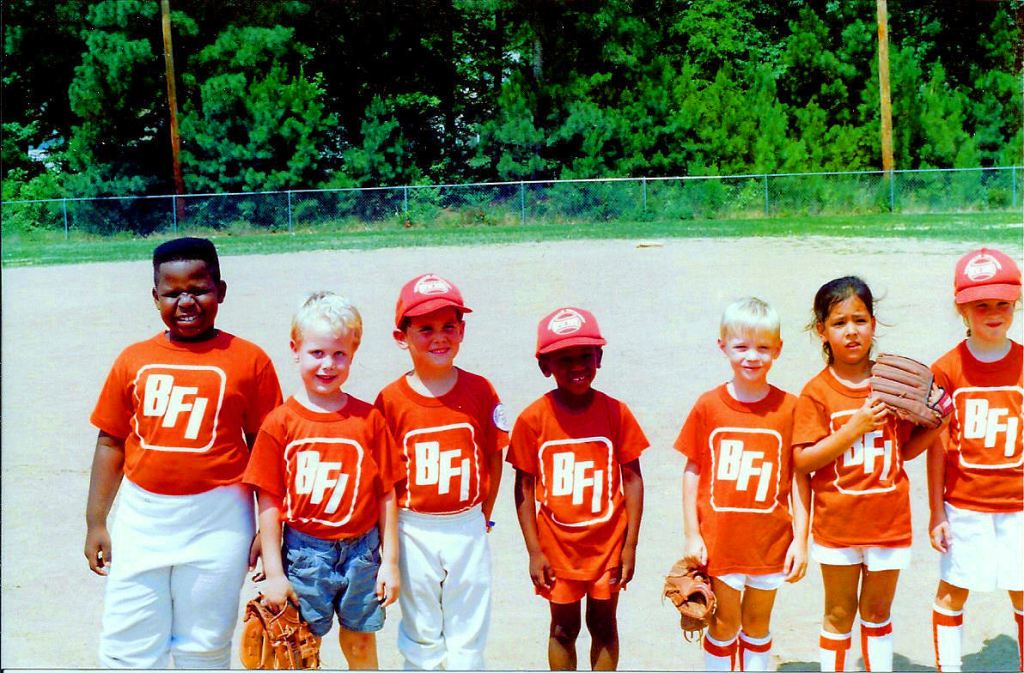
The league in West Little Rock was a hybrid of “coaches pitch” and T-ball. By that I mean you got two legit swings at a ball tossed underhand by your coach, but if you missed both, the tee was quickly brought out for a third “swing of shame”, just so the kid could feel a little better about his or her at-bat and hopefully not miss the ball sitting on the tee. You could actually strike out, however if you missed on that third swing.
Defensive strategy was “baseball-ish“. Players would line up behind a chalk line about 25-30 feet from home plate, and most outs were made at first by scooping up the ball and racing with the batter to first base. Coach Joe initially tried to get our players to field balls and try to throw to a first baseman, but after a game or two of not getting anyone out, our team devolved into the ‘Race to the Base’ defense like everyone else. There was a max run-rule of 5 per inning, and it was made clear that the league didn’t officially keep score in games, and thus there were no official winners or losers, which we constantly reinforced to our kids. Of course, this didn’t stop the parents of the better teams from doing just that-scorekeeping.
One team, sponsored by a local bank, was loaded. Credible rumors were going around that they were actually recruiting players. They were routinely scoring the maximum runs per inning and shutting out their opponents. When we played them, we were shut-out 20-0. Their kids were taking extra bases unnecessarily, cheered on rabidly by their coaches. They played their best players on the front line on defense the whole game. OK, but really? We only had a couple players get to second base the whole game. I was very relieved when the game ended, as it was painful to watch. When Casey went to get in line for his customary free Icee, he came back with a troubled, puzzled look on his face. Our conversation went just like this:
“What’s wrong, Casey?”
“That boy over there said we lost!”
I used to say that the main goal of youth baseball should be to create a love for the game that will result in the kid wanting to come back next year. Mission accomplished in 1990 and subsequent years on this goal. Casey would end up with a scholarship in baseball to a D1 college and continues to teach pitching and hitting lessons on the side. And yes, he played at Busch Stadium II as a senior at Eureka High School.
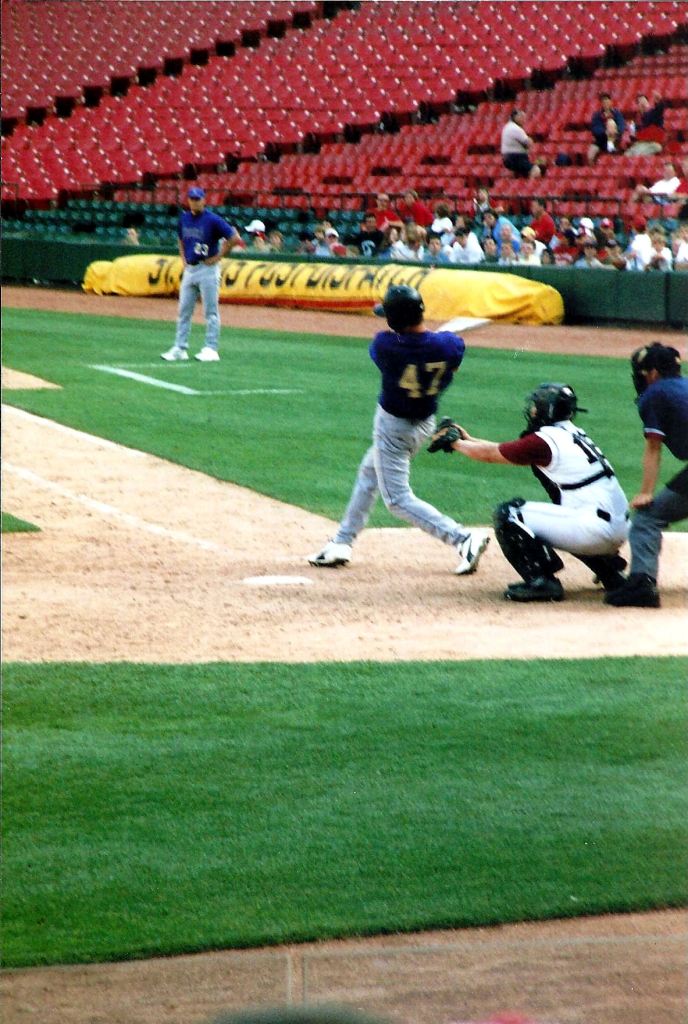

Final thought. I never wanted Casey to base his self esteem on wins or losses that his team experienced. I admit that I have roughed myself up a few times in my lifetime playing team sports with that futile and illogical concept. So, the question I always asked Casey after the game:
“Did you do your best?”
His answer? “Yes, Dad.” Every time.
 Little stories from the big adventure
I can read the pride between the lines.
Rightly so.
LikeLike
guilty
LikeLike