
Prologue
In the spring of 1977, I opted to try to put my business degree to work in Dallas. I had been talking to my best friend from SMU, Rob “Goose” Goss, who had moved back to Dallas from Chicago. He was managing a remote retail branch of a sporting goods store called Athletic Supply. The main location was not too far from SMU’s campus on Mockingbird Lane. Goose had just rented a two bedroom apartment and had been looking for a roommate. Also, thanks to Goose, there was a (temporary) job at the main location of Athletic Supply as a floor salesman waiting for me. It was part-time employment and minimum wage, but it would tide me over until I put on the long pants and interviews were scheduled. The idea was to get into a management training program with a big Texas bank. Exuberant, optimistic, naïve, youthful….I was nothing if I wasn’t all of those back then. I was giddy with the prospects.
Sadly, with time and experience, we tend to lose this exuberance. We enjoy the cotton candy with enthusiasm, but at some point we must wash our hands in reality. It is the natural way of things, although we wish it wasn’t so. Sometimes we long to go back to a time when the possibilities were still endless. Back to a time when we weren’t held back by fear of failure, disappointments and setbacks. “There’s a place in the world for a gambler”, wrote Mr. Fogelberg. Damn right.
So, it’s 1977, and having closed my bank account at Farmers and Merchants Bank of Cape Girardeau, and with a $1,500 money order evidencing my life savings from painting houses with Mr. Hinck, I loaded up my tan over brown Landau-topped Buick Skylark, and headed to Dallas to seek fame and fortune. Fortunately for me, I found neither in this great city. It simply was not meant to be. But yes, I had some great adventures along the way.
Life of Riley
Besides having a kind of a grumpy boss, I was living an idyllic life. My work hours at Athletic Supply were from 12 noon to 6 pm Monday through Friday, and 9-12 on Saturday. My duties at work were strictly retail. Goose would come in daily to pick up inventory for the other branch store, and on Saturdays I would help him gather up what he needed. The words “May I help you find something?” were my new mantra.
I slept in often, or sometimes got up in time to go on a run through the apartment complexes. I even bought a rod and reel, and would occasionally fish and sunbathe at nearby White Rock Lake.
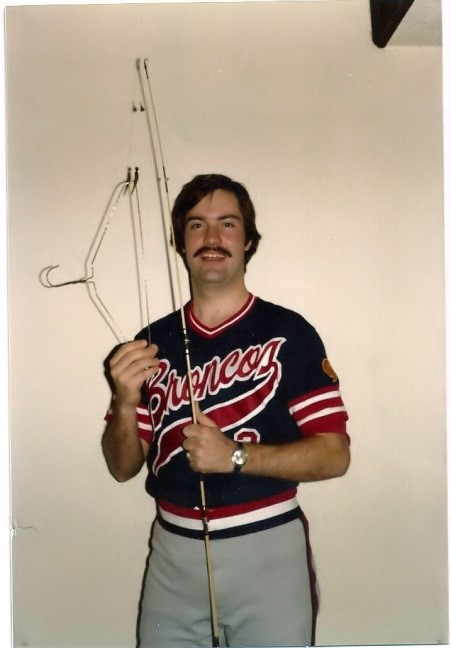
There was plenty of night life those days. The apartment was almost within walking distance to Cardinal Puff’s, The Stables, Bowley and Wilson’s Alley, Stan’s Blue Note, The Time Machine—all of these were very popular SMU hangouts in those days. Nearby Greenville Avenue, just across Central Expressway from SMU, was trendy with bars and restaurants in both directions. Our apartment complex was also a popular weekend watering place for other recent SMU grads, fraternity brothers and their friends. On Sunday mornings, the area around our apartment pool often looked like a war zone: with furniture and random obscure objects often ending up in the pool. Our apartment was on the second floor and for fun we invented a “fishing” game in which we would take my rod and reel and cast down into the pool from the balcony to try to hook and pull the patio chairs out of our pool. It was an acquired skill. On days the pool wasn’t trashed, we might fling clothes hangers into the pool for our fishing pleasure. I seem to remember that a few Coors Banquet beers may have been involved also. The cold cruel world seemed like a mere myth in those days.
The Broncos
I had played organized baseball every summer since I was eight years old, starting with the Minor League Royals at Capaha Park in 1962. Next it was the Yankees in Little League, then the Babe Ruth League Mets, followed by Cape American Legion, and most recently with the semi-pro Cape Girardeau Capahas. This was going to be my first summer without baseball. That is, until Tommy Cansler happened to stop into Athletic Supply to look for some baseball spikes. “May I help you find something?” Soon we were bantering about baseball, and it turned out that Tommy and I had played against each other in college. Tommy had played infield for University of Texas-Arlington, and just two years before, SMU had played them in a non-conference double header. Our conversation from that point went something like this:
“So, Randy, who are you playing for this summer?”
“I am not playing—in fact, this will be the first summer that I have not played since I started playing baseball.”
“Hey, we need pitchers! My team is playing in two different leagues. One plays on Sundays in South Dallas, and the other plays in the Dallas Baseball League during the week. We have a good team, man, and all we need is some pitching. You want to play with us?”
“Sure, what do I need to do?”
Tommy handed me a slip of paper with the name “Theo” written on it, along with a phone number. “This is our coach. He is a great guy—just tell him that you know me and want to pitch for the Broncos.”
A tryout with Theo (pronounced “tay-o” as it turns out) de Hoyos was held at a high school field near downtown Dallas after work. Theo was instantly likeable, a barber by trade, and was a short stocky man with thick jet-black hair and a bushy mustache. We warmed up, and after a short throwing session, Theo had seen enough, and signed me up. A handshake, and I was a Bronco! It is not uncommon: having some baseball skills gives you instant respect and acceptance in the baseball community. Just as we were about to leave, Tommy showed up with his friend and fellow teammate, Ricky Ramirez. We swatted bugs and talked baseball until way after dark.
It was at our first full practice as a team that I figured out what Tommy, Ricky and Theo didn’t bother to tell me about the Broncos. They were almost exclusively a Latino team, and the Sunday league in South Dallas was a Hispanic league. My season with the Broncos would come to be one of the most enjoyable baseball experiences I have ever had. Baseball is baseball, and everything Tommy did bother to tell me was true. This team was good.

Teammates
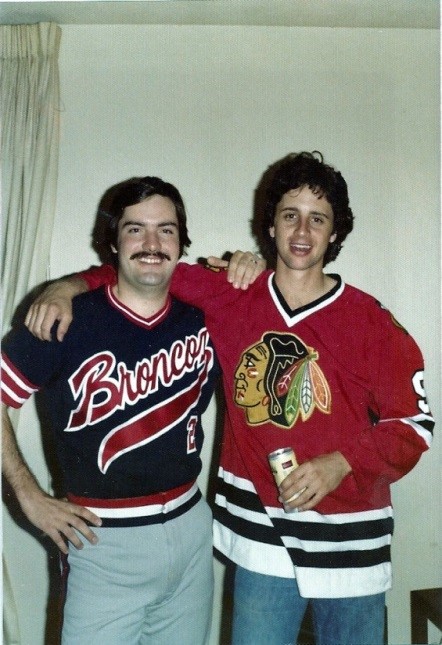
Theo was our first baseman, emergency catcher and manager. He raised enough money in the local community to outfit his Broncos in the finest uniforms I ever had the privilege to wear. The jerseys were a dark navy, heavy knitted material with red trim. Our pants were gray with the same red trim. This dark color and material choice was clearly not the best choice for the Dallas heat and humidity, in the summertime. All the jerseys had different sponsors on the back above the numbers of (at least to me) undecipherable Spanish business names. We wore “top of the line” fitted wool caps, and Theo distributed nice warm-up jackets to all the pitchers. They took their baseball seriously in South Dallas.
Our team had a mix of young players and veterans. Theo played first base and sometimes catcher with an agility that belied his short, stout physique. He also hit literally every pitcher we faced like he owned them. Tommy and Ricky had been high school teammates and had played shortstop and second base together for a number of years. They were a contrast in styles: Ricky was graceful and slick at shortstop, effortless and smooth. Tommy was gritty and scrappy and he attacked grounders as if he had a chip on his shoulder. Together they played defense with instinctive symmetry, and bantered constantly like brothers while on the field. Tommy was also dating Ricky’s younger sister. She was a knockout, by the way.
Our third baseman was a humorless guy in his late 30’s named Billy with a stellar Seleck-like mustache who looked a little rough around the edges. Billy (the only other non-Hispanic player on the Broncos besides me and Tommy) talked openly about a prior life as a heroin addict. He otherwise kept to himself, and any demons he still had seemed to be directed at umpires. He fought them constantly. Our right fielder was an aging ex-minor leaguer from the Dominican Republic named Luis Alvarez, who I was told was the best player in the league. If it wasn’t for his creaky knees, this would have been easily true. He was a pro, knew his limitations and was a very clutch hitter. It was also very cool that he knew the Alou Brothers of San Francisco Giant fame from growing up in the Dominican Republic and had played in the Minor Leagues with them. Our center fielder was a guy that everyone called “Bitche” (pronounced Beech-ay). I never knew if Bitche was his first name, his last name or his nickname. Bitche had a pencil thin mustache and long sideburns that were honed to a sharp point on his cheekbones. Bitche was fast and a good defender and base stealer. His English was probably as poor as my Spanish. We would just smile and nod at each other a lot.
The other two pitchers on the Broncos, Mario and Leico (Leek-o), were literally recruited from Mexico to play on this team. They were provided day jobs, places to stay, and most likely were in the country temporarily, just for the baseball season. Neither spoke a word of English. They could not have been more different from each other: Mario was moody; a slim 18-year-old lefty with shiny black hair down to his shoulders and an ‘attitude’. Leico was his antithesis; a heavy-set pock-faced 40ish right-hander. Their pitching styles were just as polar-opposite; Mario was over-confident, wild, and relied too much on his fastball. Leico was careful, crafty, threw strikes and everything had a different spin. He pitched faithfully on the corners of the plate, always nibbling.
The teams in our Sunday League were: Pericos, Tecolotes, Stallions, Broncos, and the Eagles. These teams had developed into great rivals over the years. The league was very competitive without being contentious. They played hard, but the players were always respectful. In an era in which razzing and derision were so prevalent, there was none of that in this league.
Mysterious “Bench Coach”
There was another guy that was somehow associated with our team, but I have no idea how. He came to every game, sat on our bench, and seemingly interacted with no one, not even Theo. He was always dressed the same: Sun toasted leathery-skin, white cowboy hat, mirrored aviator sunglasses (day or night), toothpick, western style shirt, faded jeans and cowboy boots. He sat by himself at the end of the bench with his arms crossed on top of his oversized belly for all nine innings without talking to anyone. He did smile occasionally, revealing two shiny gold teeth, when we would win. His connection to the Broncos would remain a mystery to me, although my imagination told me he could have been a local mafioso.
“Curv-o es muy bueno”
At one point, Theo, who was constantly bragging on my curveball, asked me to show Leico and Mario how I threw it. I still chuckle about this. Here I am, right before a game, knowing only a few words of Spanish, trying to teach two guys who don’t speak English how to throw a pitch. I remember them being very attentive and nodding a lot. There were lots of gestures and demonstrations with very few words. During the course of the summer while my Spanish did not improve, I did learn that the Spanish word for curve is “curv-o”. I learned a few other words and phrases that summer: “pelota” = ball; “tecolote” = owl; “pericos” = parrots; “arriba, Bitche!” = Go to third, Bitche!; and “Sum-uh-ma Beech” = (Uh, you can figure this one out).
I was usually one of our Sunday pitchers, primarily because I could throw a decent curve. Another reason was the fact that the weekday DBL games which we played all over Dallas were sometimes hard for me to get to on time with a job that lasted until 6pm and generally bad traffic in and around Dallas. One thing I had been told early on by Theo was that the Sunday South Dallas League was a fast-ball hitting league. He also said that if I threw my curveball often, I would do well. He was right. Usually, when a batter is facing someone who throws a big hook, the strategy is to recognize the pitch early and “take”, or simply wait until they hang one. Also, when a pitcher throws a big overhand curve, it usually needs to be perfect to get an umpire to call it a strike. In this league, however, the batters swung the bats often and aggressively at all manner of pitches.
A Family Affair
Sunday games were played in Kiest Park in South Oak Cliff, a suburb of Dallas. It was a pretty long drive from my apartment, but I would crank up the tunes and head south on US 75/Central Expressway. I think the local radio stations must have played “Brick House” by the Commodores every 20 minutes that summer. An hour later, I was there.
Sunday baseball at Kiest Park was an all-day family affair. The league basically took over the park. Large groups of Hispanic families would fill the park to picnic, drink beer and watch baseball. It was amateur baseball, sure, but when ballplayers would get out of their cars to walk to the diamond, the sea of people would kind of ‘part’, and shy kids would come up to us and walk us to the stadium. Their innocent reverence, however misplaced, was very touching. There were at least 400-500 people there to watch these games, no exaggeration. Lawn chairs, large colorful umbrellas, picnic tables full of food—all this despite the heat and humidity of Dallas summers. I tip my cap with genuine respect for all those families, kids, wives, girlfriends……their devotion to baseball was unmatched.
Co-League Champs
We won nearly every league game that summer. Details from these games are not a permanent part of my memory, except for one unfortunate incident while I was pitching one Sunday. A sharply hit one-hopper that I was unable to knock down or deflect hit me in a very—shall we say—“highly sensitive area of the male human anatomy” (right in the ‘nads). I was not wearing a protective cup. I eventually recovered and finished the game, but play was stopped for several long minutes while I was bent over, pale, hands on knees, studying the color of the dirt on the mound. For some reason, this whole scene was hilarious to the 500 hundred or so fans there. Must be a cultural thing, I guess. I remember that for the rest of the day, ladies were pointing, whispering to each other, and giggling at me. I just smiled and tipped my cap. What else could I do?
We kind of bounced around at .500 in the Dallas Baseball League that summer, but we fared much better in the South Dallas League. We tied for first with the Stallions during the regular season with just two losses each as I recall. The playoffs were looming, but by that time, with summer almost over, I had something else on my mind; namely, my future. Remember I said that I was going to interview for bank management training programs? I actually tried several times to get interviews by calling some of the downtown banks. My resume and my gray suit were ready to go. Each time I was referred to personnel, and the first question they had for me was: do you have an MBA? Well, each time I would explain that I had a bachelor’s degree, and each time they politely discouraged me from applying for their management training programs. OK, maybe I gave up too easily. That is probably true.
I found out that my high school friend Narvol Randol had entered the new MBA program at Southeast Missouri State University in Cape. He said they were hungry for students and had internships available to defray costs. A few phone calls later, I was committed. It also meant that I had to leave right away for Missouri. I remember twinges of sadness as I hit the road and put Dallas in the rear-view mirror. I knew that there may not be another completely carefree summer quite like that one. I felt a desperate impulse to try to burn the details of this summer into my memory.
Epilogue
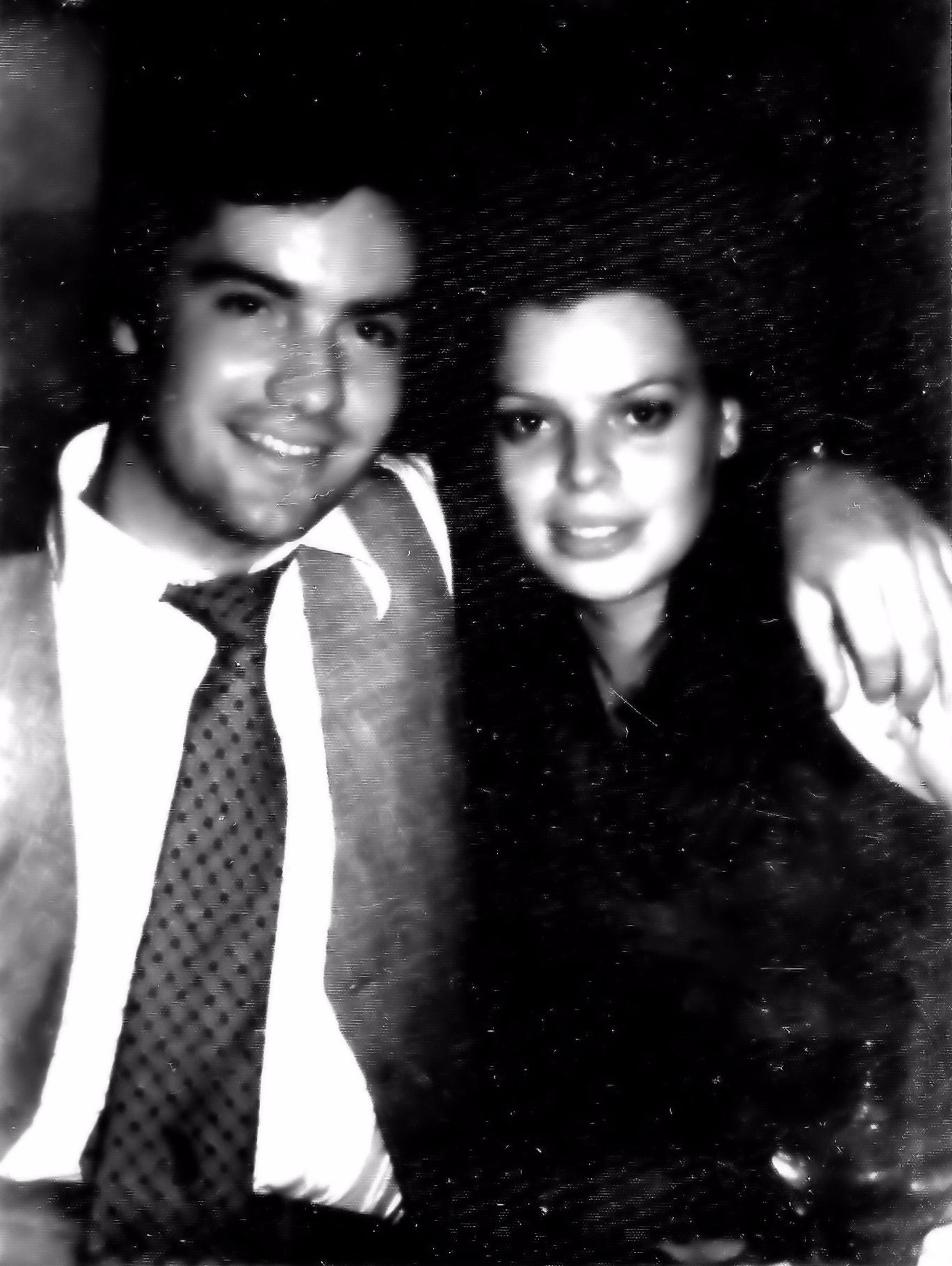
My return to Cape was fortuitous. In September, my friend Goose stopped in Cape on his way to his home in Chicago, and eventually to a new job in Indiana. We stopped in to the local watering hole, the Pladium, on Friday night for a beer and ran into an acquaintance from Central High School, Rita Joyce, who happened to be there with a friend. We all had a nice conversation. Well….one thing leads to another…..let’s just say it was all meant to be.
Uh, yeah………..
 Little stories from the big adventure